
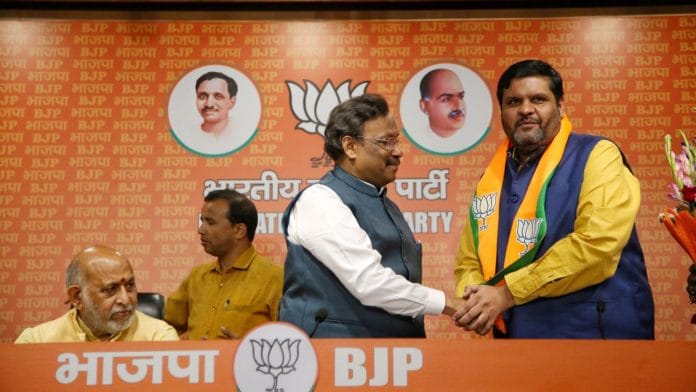
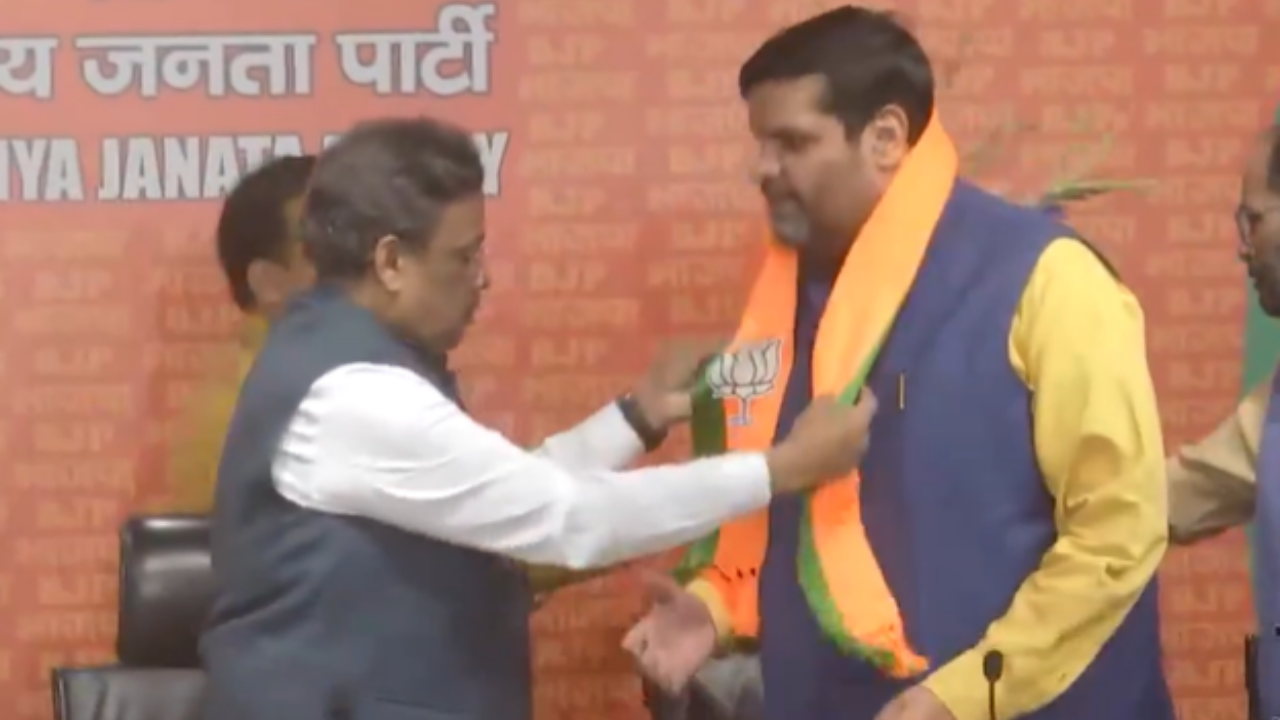
Gourav Vallabh Joins BJP is the ever-shifting landscape of Indian politics, Gourav Vallabh, a prominent Congress spokesperson, has made a dramatic move. Hours after publicly denouncing the Congress party as “directionless,” he crossed the aisle and joined the Bharatiya Janata Party (BJP). This defection has sent shockwaves through the political circles, leaving many wondering about the underlying motivations and implications.
The Resignation Letter of Gourav Vallabh
In a candid and heartfelt resignation letter addressed to Congress party chief Mallikarjun Kharge, Vallabh expressed his discontent. He cited several reasons for his departure, including the party’s lack of clarity on critical issues. Notably, he mentioned the caste census and the party’s stance on Sanatan Dharma (the eternal religion). Vallabh’s frustration with the Congress’s direction led him to take this bold step.
In a poignant letter addressed to Congress party chief Mallikarjun Kharge, Gourav Vallabh bared his soul. His words carried the weight of disillusionment and frustration, painting a vivid picture of his reasons for departure. Here are the key facets of that letter:
1. Lack of Clarity
Vallabh minced no words when he expressed his discontent with the party’s lack of clarity. The Congress, once a formidable force, now appeared adrift, lacking a cohesive strategy. The absence of a clear direction left Vallabh questioning his allegiance.
2. Critical Issues Ignored
The letter subtly pointed to critical issues that had been relegated to the sidelines. Vallabh highlighted two specific areas: the caste census and the party’s stance on Sanatan Dharma (often referred to as Hinduism). These were not mere policy matters; they struck at the heart of identity and representation.
3. The Caste Census Quandary
The demand for a caste-based census has been a contentious issue. While some argue that it provides valuable data for targeted policies, others fear it could exacerbate divisions. Vallabh’s frustration stemmed from the party’s reluctance to take a clear stand on this matter.
4. Sanatan Dharma and Ideological Fault Lines
Vallabh’s refusal to raise “anti-Sanatan” slogans speaks volumes. Sanatan Dharma is deeply ingrained in India’s cultural fabric. By distancing himself from slogans against it, Vallabh underscored the ideological fault lines within the Congress. His alignment with the BJP, a party that champions Hindutva, adds complexity to the narrative.
5. A Bold Step
In the closing lines, Vallabh’s resignation was more than a mere formality. It was a bold step—a leap into uncertainty. His decision reverberated beyond the confines of party politics, touching upon loyalty, ideology, and personal convictions.
The Directionless Congress
Vallabh minced no words when he labeled the Congress as “directionless.” His critique echoed sentiments shared by many within the party. The lack of a cohesive strategy, internal divisions, and wavering positions on crucial matters have eroded the Congress’s credibility. Vallabh’s departure underscores the growing disillusionment among party members.
The Anti-Sanatan Slogan Dilemma
One of the most intriguing aspects of Vallabh’s decision is his refusal to raise “anti-Sanatan” slogans. Sanatan Dharma, often referred to as Hinduism, holds immense cultural and religious significance in India. Vallabh’s assertion that he cannot endorse slogans against it highlights the ideological fault lines within the Congress. His alignment with the BJP, a party that champions Hindutva, adds complexity to the narrative.
 Ashish Bajpai